
Streets and Pavement
Amanda Kendall
ShiremanstownBoro@comcast.net
Why Do the Plows Block My Driveway with Snow?
The primary goal of plowing is to remove snow from streets so that the road is open for emergency and residential vehicles.
Snowplows push the snow from the travel lanes of the road to the driver’s right side; unfortunately this results in snow piling up in front of driveways. Plow trucks will usually make one pass to open the road and will return to widen the road to the shoulders for future snow accumulation. Residents are advised to wait until the plow has been through their road prior to cleaning their driveway and mailbox area. If drifting or more snow occurs the plows may have to make multiple passes on a road at a later time to keep the road clear.
Residents often ask why drivers do not lift the plow blades for each driveway; this is not a practical solution as this would only leave a pile of snow in the roadway and the roads would never be cleared. Whenever possible plow drivers will try to prevent excessive blockages at driveways but at times this is not possible.
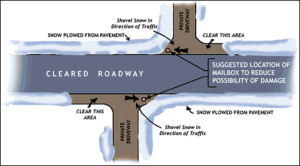
Please remember that the clearing of driveway and mailbox areas is the responsibility of the resident. Finally, the following is a diagram which shows how residents can remove snow in a manner that will lessen amount of snow that is pushed back into the driveway from a subsequent pass by a plow:
Storm Water Issues
What is Storm Water Runoff?
What Can You Do To Prevent Stormwater Pollution?
You may have noticed medallions attached to the stormwater inlets around the Borough. These have been installed to raise awareness about pollution generated from stormwater runoff.
When it rains, stormwater runs over our yards, streets, parking lots, parks, and playgrounds, carrying with it everything in its path. Pollutants such as oil and grease from cars, sediment from construction sites, and bacteria from pet feces are transported with the water as it’s conveyed to the Yellow Breeches, Cedar Run Watershed, or Susquehanna River, either overland or via a storm drain.
Unlike sanitary sewers that divert water to a treatment plant directly from your home, storm drains lead directly to surrounding surface waters without any type of treatment. Stormwater pollutants can affect water quality, recreational activities, aesthetic value, wildlife habitat, and the normal life cycle of organisms and animals.
- Keep litter, pet waste, leaves & debris out of street gutters and storm drains – these outlets drain directly to the creek or river and ultimately the Chesapeake Bay.
- Apply lawn & garden chemicals sparingly & according to directions.
- Dispose of used oil, antifreeze, paints & other household chemicals properly, not in storm sewers or drains.
- Clean up spilled brake fluid, oil, grease & antifreeze. Do not hose them into the street, where they can eventually reach the creek or river.
- Control soil erosion on your property by planting ground cover & stabilizing erosion-prone areas.
- Purchase household detergents & cleaners that are low in phosphorous to reduce the number of nutrients discharged into surface waters.
- Do not release chlorinated pool water into the storm sewer system.
- Notify the Borough of any suspected illicit discharges to the storm sewer system.